


Eddie Speed of NoteSchool on Mortgage Note Investing
It's Time to Be the Bank When Investing in Real Estate: Insights from Eddie Speed of NoteSchool

You did everything right. You earned the degree, climbed the career ladder, and built the income, yet something still feels unfinished. For years, I assumed owning rental property was the obvious next move, until the math stopped working the way it used to.
That's the very topic I explored with Eddie Speed of NoteSchool and Colonial Funding Group on my podcast. Eddie has spent more than four decades quietly building wealth in a corner of real estate most people never hear about. In our conversation, he shared why being the bank may be the smartest play in today's market, and how everyday investors can step into it.
Here’s a preview of that episode:
Why I Had This Conversation
I started where a lot of you are. I had a stable career as a Marine Corps veteran and civil engineer, but the W2 world left me restless. I chased the stock market first, got burned by FOMO, buying high and selling low, and eventually found real estate.
So, when I sat down with Eddie, I wanted to understand an angle I'd mostly ignored: buying paper instead of property.
Eddie entered the business in 1980 at age 20, introduced by his future father-in-law, and has since closed over 50,000 note transactions. When someone with that kind of track record tells me the game has changed, I stop and listen.
Watch the full episode here:
What a Note Actually Is (And Why It Matters Now)
The first thing I needed Eddie to clarify was the basics. A note, he explained, is the promise-to-pay document you sign at closing, secured by the property through a mortgage or deed of trust. When Eddie buys "paper," he's buying that income stream and stepping into the lender's position.
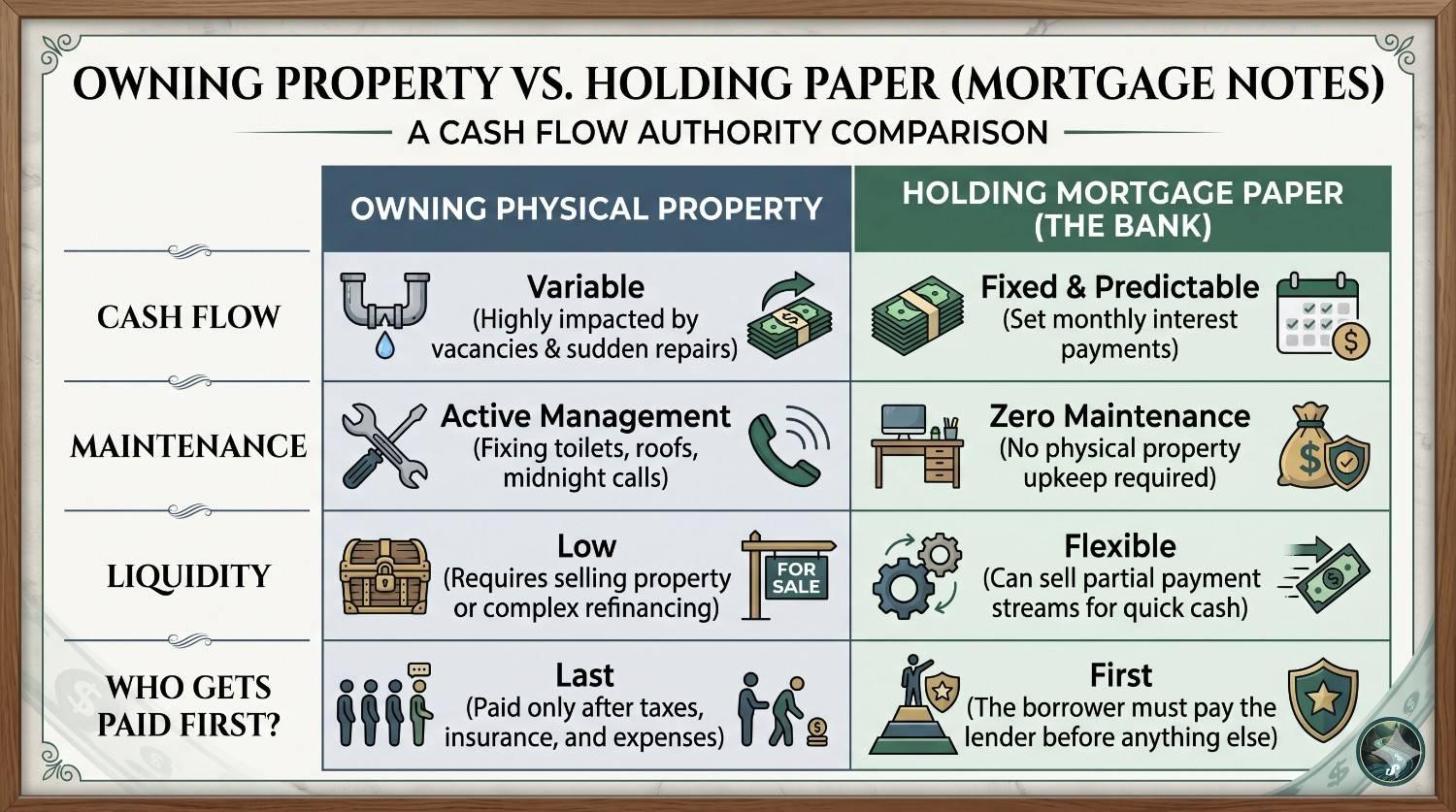
What stood out to me was his point on mortgage note investing as a cycle. He's blunt that some seasons favor owning property and others favor holding paper, and right now, he believes we're firmly in a note cycle.
"We have cycles in the industry where notes are better, and we have cycles in the industry where physically owning the property is better. Right now, we are definitely in a note cycle, and your folks didn't do anything wrong; the market changed, somebody moved their cheese, and that was done by inflation."
That framing reset how I think about timing. Owning property isn't wrong. It's just not always the strongest move, and Eddie's read is that the conditions have clearly shifted in favor of paper.
The Math That Changed My Mind
Eddie laid out numbers that are hard to argue with. Back in 2018, a typical rental could net around 8% annually before the mortgage payment. On a $200,000 house, that was real, dependable income across most of the country.
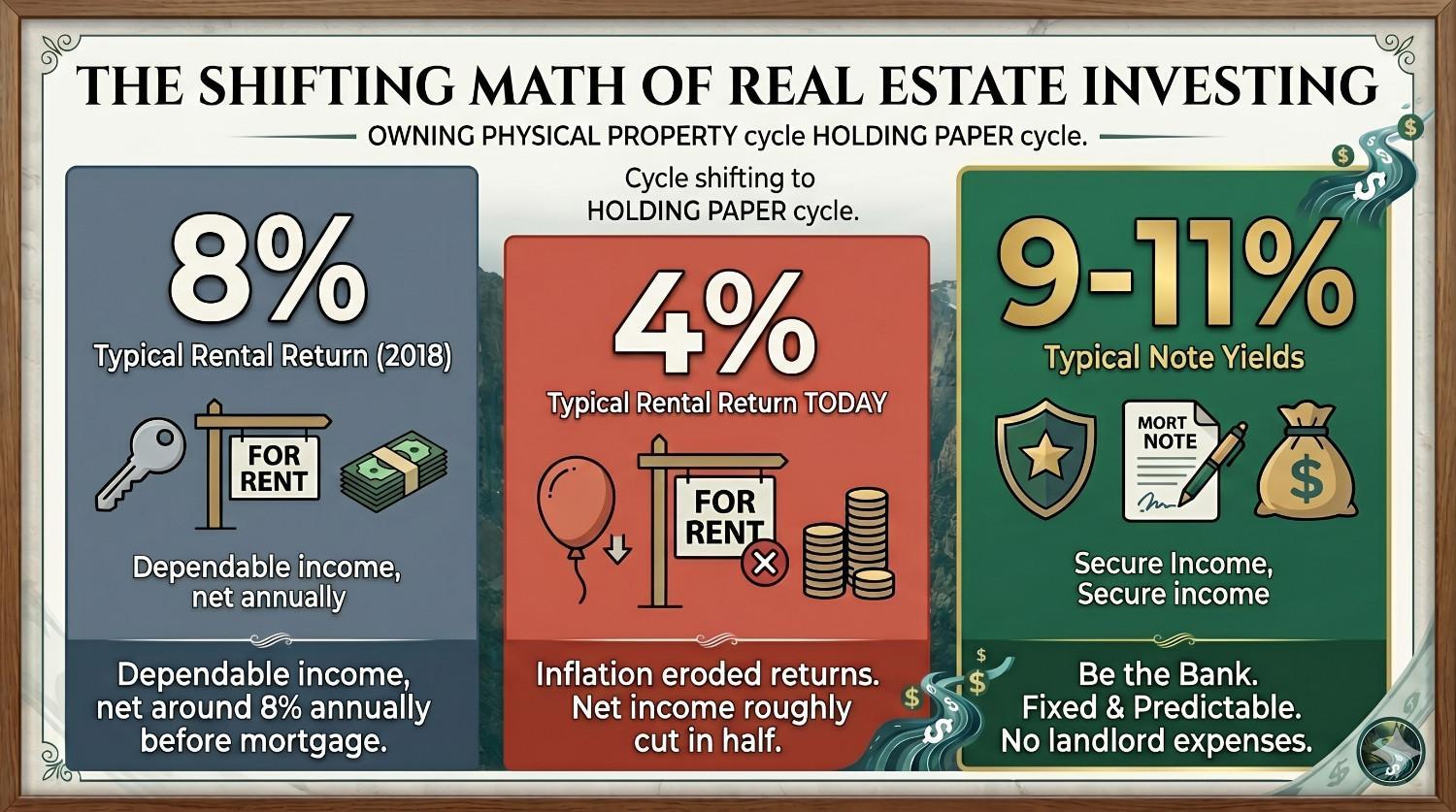
Today, on that same house, he says you're closer to 4%. The culprit is inflation. Your home appreciated, but that equity is trapped, and you're not getting paid on it. Your net income, meanwhile, got cut roughly in half.
He was clear that California, New York City, and a handful of coastal markets are exceptions, but for most of the country, the math simply doesn't work the way it did a few years ago.
Compare that to a note paying 9% to 11% interest with no water heaters to replace and no tenant calls at midnight. As Eddie put it, the landlord is the last to know what he'll make each month, while the note holder gets paid first. That gap is why Eddie now runs a major initiative that helps investors convert rental portfolios into seller-financed notes, using liquidity strategies to pay off the underlying debt rather than risky wraparounds with a due-on-sale clause.
Liquidity Is the Secret Most People Miss
I assumed money parked in a note was locked up like a CD, untouchable until the term ended. Eddie pushed back hard, and the distinction changed the whole asset class for me.
"Everybody with a driver's license knows you can get a mortgage against a rental house, but very few people know you can go get your money back out of a note and still keep some income. Mortgage banking would not work without liquidity strategies, my friend, and that's a big part of what I teach."
The tactical lesson has two parts.
First, you can pull liquidity at the moment you buy the note, or you can structure it to access cash later, selling part of the payment stream while keeping some income for yourself.
Second, even a 30-year note rarely runs its full term. Statistically, Eddie says, that loan pays off in about eight years, because borrowers refinance, sell when a job changes, or upgrade to a different home.
The mistake to avoid is assuming your capital is trapped for three decades. It rarely is, and once you understand the exit strategies, notes start to look far more flexible than most rentals.
Funding It with Money You Already Have
One objection I hear constantly is "I don't have the capital." But Eddie reminded me he started broke, living in a 40-year-old mobile home at age 20, and hustled his way in.

The bigger unlock for many of us is retirement money. Eddie has taught for roughly 25 of the country's self-directed retirement account custodians, with Equity Trust being the largest at 400,000 clients. He estimates 35% to 40% of every note he sells goes into a self-directed account.
If you've got an old 401(k) or IRA sitting idle, that's capital you can put to work, and notes give you a fixed, known rate of return instead of the uncertainty I felt watching the stock market swing.
What Changed for Me After This Conversation
I still believe in active deals. I'm closing on a four-unit with a 25% cash-on-cash return, and I'll always invest in real estate through hands-on opportunities when the numbers are there. It's the same conviction that drives my work at The Flow Authority, where I help other investors put their capital to work intelligently rather than leaving it idle.
"I'd never tell somebody they're crazy to invest in something they have competence and confidence in. But buying real estate notes is a great diversity, something else you do too, and for a lot of your listeners, they just need that diversity in their portfolio."
What shifted for me is seeing notes as another lever, not a replacement. Seller financing and note investing open a path to passive real estate income that doesn't depend on finding a diamond in the rough. Eddie's view that the next three to five years, including blockchain-based loan sales, could be the best he's seen since 1980 made me want to keep this tool firmly on my belt. If you're ready to put capital to work, you can invest in real estate through both paths.
Want to hear my full conversation with Eddie Speed of NoteSchool on why notes beat rentals right now?
Frequently Asked Questions
What is a mortgage note?
It's the promise-to-pay document a borrower signs at closing, secured by the property. When you buy the note, you collect the interest and payments as if you were the bank.
Why does Eddie Speed say we're in a "note cycle"?
Because inflation has cut typical rental net returns from about 8% to 4%, while notes can pay 9% to 11% interest without landlord expenses, making paper more attractive than property right now.
Is my money locked up for 30 years when I buy a note?
No. There are liquidity strategies to access your capital, and 30-year notes statistically pay off in roughly eight years as borrowers sell or refinance.
Can I use retirement funds to invest in notes?
Yes. Self-directed retirement accounts, often through custodians, can hold notes, and they make up 35% to 40% of Eddie's note sales.
Apply as a Guest on the Cash Flow Authority Podcast
Real estate is shifting. Rates are unpredictable, equity is getting trapped, and the old playbook isn't delivering the way it used to. The investors who thrive now are the ones willing to explore new levers.
If you're actively working in the industry and solving real problems, I'd love to have you on my show, too!
The Cash Flow Authority is produced by Icons of Real Estate, the #1 Real Estate Podcast Network. If you are a real estate professional, apply to be a guest speaker across the network!
Disclaimer: The Cash Flow Authority makes no promise or guarantee of any results, money, success, or lifestyle from learning real estate investing strategies. The information provided in this blog is for educational and informational purposes only and should not be considered financial, legal, or professional advice. The views expressed in this blog are those of the author and do not necessarily reflect the official policies or positions of any organization, government agency, or financial institution. Any personal experiences shared are for illustrative purposes only and may not apply to every person's situation. This information is general, not personal. Seek specific advice from a licensed professional for legal, financial, and business decisions. There are no typical results in real estate investing; every person, property, and transaction is unique. The information shared in this blog is believed to be truthful, accurate, legal, moral, and ethical, and is subject to change.