


Lauren Rogers of Veritas Equity Partners: Workforce Housing Investing
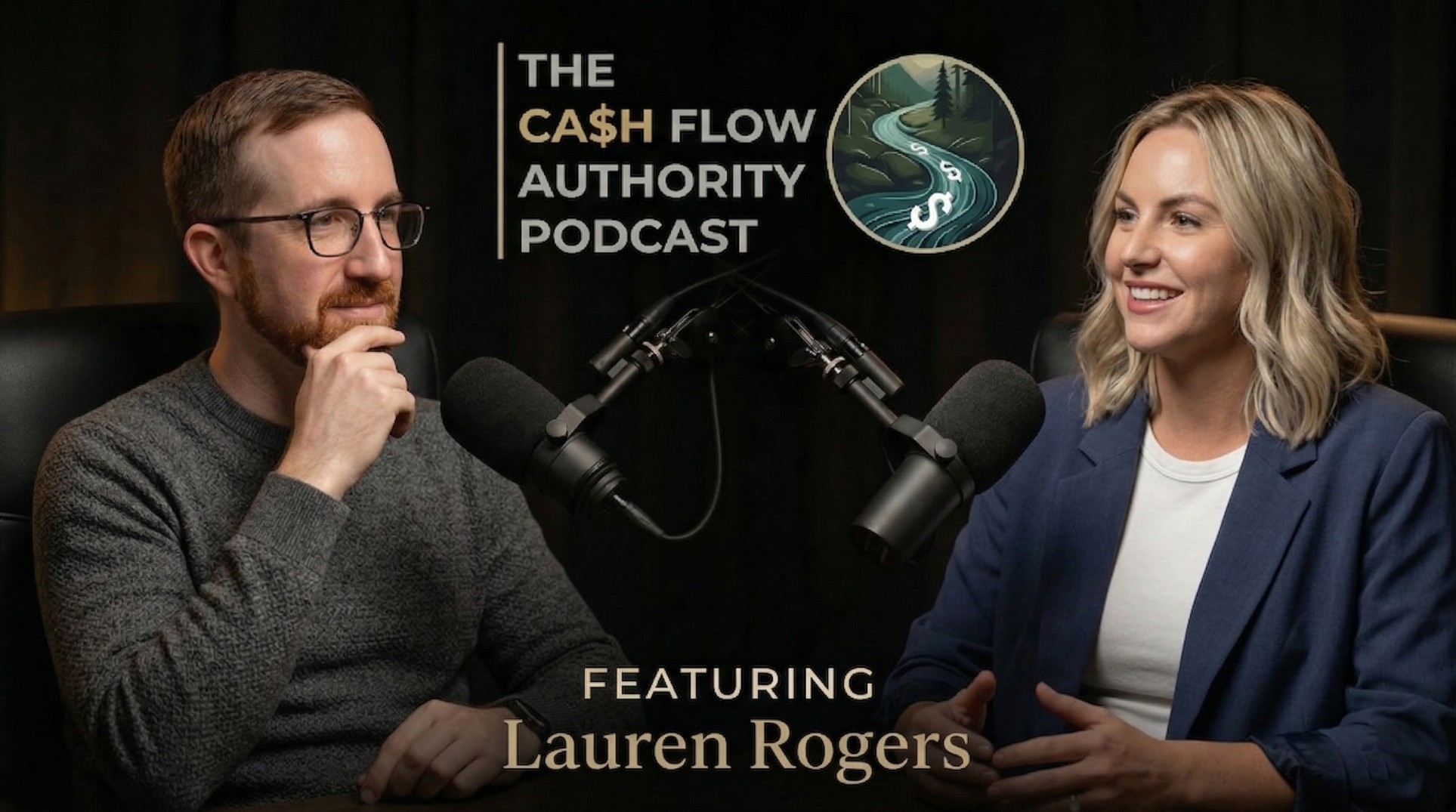
Lauren Rogers spent a decade in tech sales at Tableau and Amazon Web Services before she and her business partner started buying apartment buildings for tenants making $40,000 to $80,000 a year. When she came on the Cashflow Authority podcast, her clarity on risk stayed with me more than the track record at Veritas Equity Partners, which manages $50M+ in assets at a 31% annualized ROI. Lauren focuses on conservative multifamily syndication backed by agency debt in Washington state, buying buildings that cash flow from day one. If you’ve been on the fence about taking the next step in real estate, this conversation laid out exactly what to look for and what to avoid.
We pulled a few of the sharpest moments from this conversation. Give them a watch below before you read on.
The full episode goes deep on debt structures, syndicator red flags, and why Lauren thinks the current buying window in Washington won’t stay open long. Watch the full conversation here.
Lauren and her team are the kind of operators we build the Cashflow Authority around. Follow Veritas on Instagram and Facebook, and connect with Lauren on LinkedIn to learn more about their deals. For more conversations like this one, join our community on Instagram, Facebook, and X.
How Lauren Rogers Went from Amazon Web Services to Veritas Equity Partners

Lauren spent nearly seven years at Amazon Web Services after starting at Tableau (before Salesforce acquired it), working across global marketing, sales, and channel partnerships. The compensation was strong but heavily weighted toward RSUs, and the tax hit from liquidating those shares was brutal.
She described the frustration that pushed her toward something different.
“I was just getting frustrated with my compensation structure being mainly in RSUs. Having to transact on those and pay extraordinary taxes without any cash flow was difficult. I started listening to BiggerPockets and thinking real estate investing was super easy, like I was just going to go buy a fourplex. One of my friends suggested I talk to someone with experience in the space before I dumped a bunch of money into an investment strategy I didn’t really understand.”
That friend’s advice led her to Alex Birch, who had spent 15 years building a workforce housing portfolio in Washington. They launched Veritas Equity Partners about three years ago: Alex brought the deal expertise, Lauren brought the capital-raising network from tech.
What Is Workforce Housing Investing and Why Washington State?
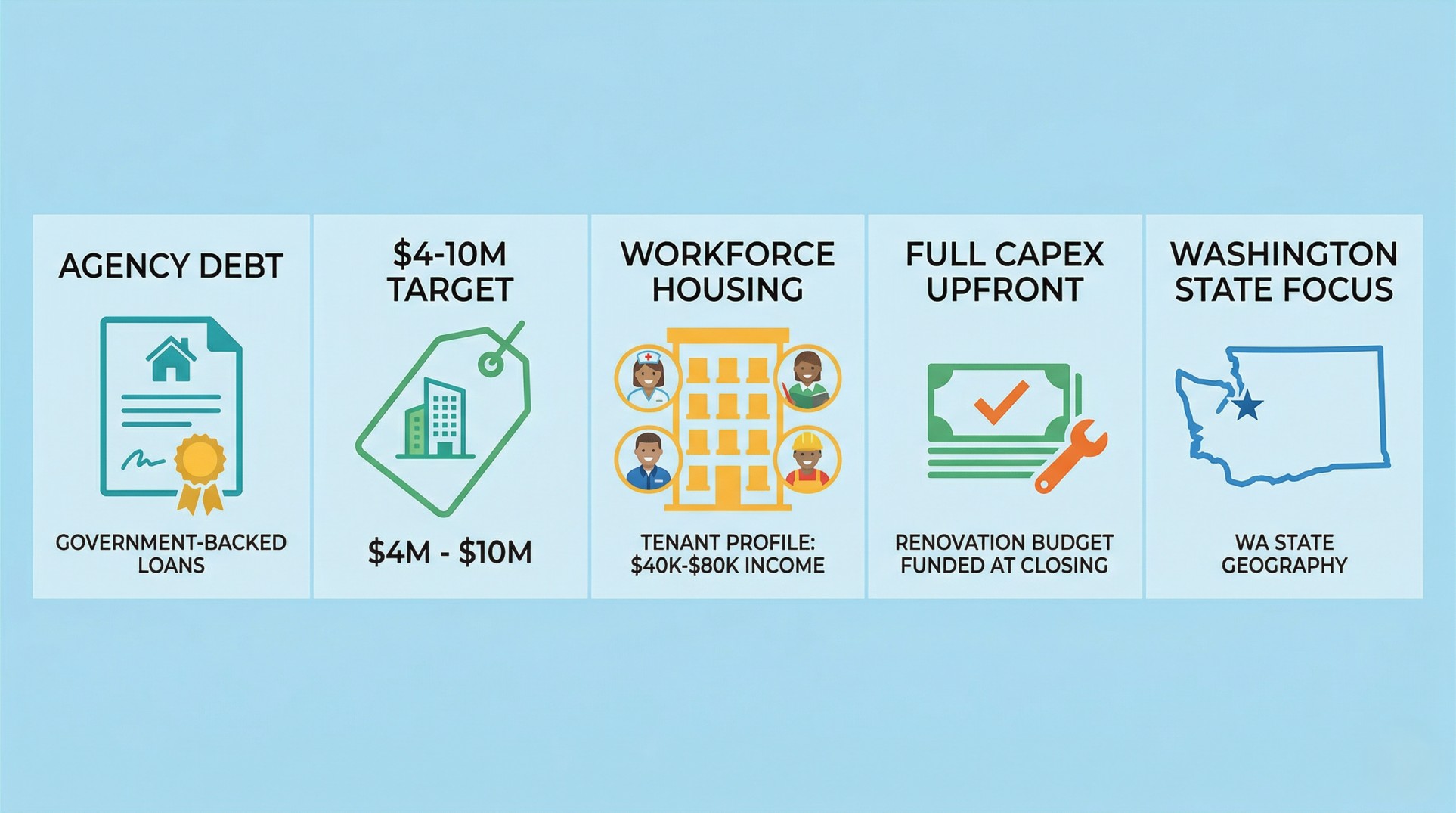
Workforce housing, the way Lauren defines it, means C to C+/B- multifamily properties rented at or near median market rates: 1960s through 1990s wood-frame walk-ups in desirable locations, serving tenants earning $40,000 to $80,000 a year. Think blue-collar workers, restaurant industry employees, and service professionals who support the tech economy in the Seattle region.
The math in Washington makes the case. Starter homes in the Seattle metro run north of $800,000, and in Edmonds, the median home is a million dollars. Most workforce housing tenants will never afford to buy a home, and that structural demand isn’t going anywhere. Combine it with a state that’s severely under-permitted and not producing enough housing, and vacancy risk stays about as low as it gets for anyone investing in multifamily syndication.
Lauren lives in Washington, buys in Washington, and has done this many times over. That kind of geographic specialization separates a conservative thesis from a marketing pitch.
What Conservative Investors Look for Before Wiring Their Funds
The investors Lauren works with are tech professionals and engineers who treat every investment like a math problem. They want the spreadsheet, the debt structure, and the business plan before they commit. That mindset aligns with how we approach real estate education, and it’s exactly how Veritas operates.
“What’s more conservative than median-income housing? Especially in Washington, there’s a massive housing shortage, we’re way under-permitted, and people historically want to live here. It’s a desirable market with some of the biggest companies in the world headquartered here, a strong economy, and not enough land. In my mind, I don’t know what gets more conservative than something you can tangibly see and touch, and where people need space to live.”
“Within real estate, we’re not going after A-class, high-end buildings where people might move out if they lose their jobs. Most of our tenants realistically will not be able to afford to buy a home.”
Veritas projects a 15 to 20% IRR on seven- to ten-year fixed agency debt. Many of their investors don’t need the projected upside; they want protected, tax-advantaged cash flow from a tangible asset.
How to Evaluate a Real Estate Syndicator Before Investing in Multifamily Syndication
Lauren’s framework for evaluating operators starts with debt, and she’s blunt about it.
“Debt is where people lose, that would be my number one thing. I would never invest with someone doing hard money loans. We only do agency debt, which is conservative in nature because it’s underwritten by the government. The government also underwrites the operator; you can’t get agency loans unless you have a track record of success in that exact type of building.”
“I get nervous when I see capital raisers chasing the ‘shiny thing,’ deals in Texas, Arizona, all different classes, and now they like RV parks. If you want RV parks, go talk to the RV park guy who owns 20 RV parks. Don’t get in bed with someone whose portfolio isn’t cohesive.”
Beyond debt, she looks at how renovations are funded. Veritas raises the full capex budget before closing. She’s seen syndicators raise just enough to close and try to fund renovations from cash flow, which she called crazy.
How Veritas Equity Partners Sources Off-Market Multifamily Deals
Veritas buys buildings in the $4 to $10 million range and rarely buys anything publicly listed. Brokers bring them sellers who need a serious buyer who will actually close. In Snohomish County alone, over a thousand buildings fit that price range, so deal flow isn’t the challenge. The advantage is being the buyer brokers call first.
Lauren Rogers and her team at Veritas Equity Partners reinforce that reliability through their light value-add strategy. Hundreds of completed unit turns mean they know exactly what each costs: carpet out, LVP in, new counters, cupboards, appliances, and sometimes an exterior refresh. No permitting, no development risk.
How New Investors Can Start in Multifamily Real Estate Without Taking on All the Risk
Lauren’s advice for first-timers is to align with an experienced operator before going solo. She did exactly that with Alex Birch, and it worked. She’s candid about the other path, though.
“I’m not against doing it on your own, either. I admire people who just go out and buy a deal, it’s a potentially expensive education, but still worth it. I’d much rather do that than pay $300,000 to $500,000 for college. But I do encourage people to throw $50,000 in with a syndicator they get to know and trust; you get access to all of their investor reporting and see how it runs.”
That $50,000 functions as a real-time education in syndicated real estate investing, giving you monthly reports, quarterly updates, and direct access to the operator. Some of Lauren’s investors plan to pull their capital and do it themselves eventually, and she’s fine with that. The point is to learn the mechanics before your name is on a loan. If you’re building that foundation, our 90-Day Cash Flow Accelerator is designed for exactly that.
How Veritas Builds Long-Term Trust with Limited Partners
Lauren is direct about what keeps investors coming back.
“Number one, just be super transparent. If things aren’t performing or something comes up, over-communicate. People in this type of investment are very reasonable. Our minimum is $50,000 and this is not their only $50,000. Most people investing in this kind of thing understand the fundamentals; they’ve been doing it long enough that their expectations aren’t unrealistic. We also turn some people down. If we get the sense that this is their last $50,000 or their expectations are unreasonable, we don’t take just anyone’s money.”
Veritas sends monthly financial reports, detailed quarterly reports, and a newsletter with market research. That ongoing education, paired with strong deal performance (they’ve never done a capital call), builds investor confidence that marketing alone can’t replicate. We share similar thinking on our blog.
Why Right Now May Be the Best Entry Point for Washington State Multifamily
Lauren doesn’t hedge on this. She sees the current moment as an exceptional buying window, and she’s putting capital to work.
“I think people should be buying. We have an incredibly good basis here in Washington right now. Our deals are cash-flowing better than they have historically because we’re able to buy at a discount. I’m not going to say we’re at the bottom, no one really knows, but we’re buying at a really good basis, and I think that’s undebatable. Some people seem nervous right now, but I say: if there’s blood in the streets, buy.”
The 2010 to 2021 era produced unprecedented multifamily syndication returns. People doubled their money in two years. Lauren’s partner Alex did that, and even he says those results aren’t what they sell today. If a syndicator projects 25% IRR right now, Lauren doesn’t buy it, and neither should you. The goal is cash-flowing assets bought at a good basis, with an operator who can show exactly how they defend those projections.
Pro Formas vs. Reality — How Veritas Underwrites Conservative Deals
Brokers list properties based on projected performance, not trailing 12-month income. I see this constantly, and Lauren treats the distinction as a hard rule. If the deal doesn’t cash flow based on current performance, she doesn’t buy it. The upside is a bonus on top of a deal that already works.
Veritas buildings go through multiple inspections: government-required agency inspections, a personal inspector, and insurance reviews. Lauren told me nothing has ever surfaced as a surprise after closing. That diligence ties directly to raising and planning the full renovation budget before they close.
Where Private Equity Real Estate Is Heading in the Next 3–5 Years
Institutional capital is starting to come back into multifamily, which means deals will get more competitive within 12 months. That’s why Veritas is raising aggressively right now.
The Sun Belt cautionary tale matters. During COVID, operators piled into Sun Belt markets like Texas and Arizona. Some deals went underwater, giving multifamily syndication a bad reputation. Lauren thinks that’s not entirely fair. Real estate is deeply market-dependent, and applying a national view to a local market misses the point.
Washington’s fundamentals hold because the economy is anchored by major tech companies, housing supply is structurally constrained, and tenant demand for workforce housing isn’t going away. Lauren is buying in a market she knows, with a strategy she’s executed many times, before the window closes.
Key Takeaways
Workforce housing in Washington is recession-resistant because tenants are priced out of homeownership
Agency-only debt with fixed seven- to ten-year terms is the foundation of risk management in multifamily syndication
The best syndicators specialize in one asset class and one geography; operators chasing trends across markets are a red flag
Passive investing through a syndicator gives you reporting access and deal education without having your name on a loan
The buying window in Washington may narrow within 12 months as institutional capital returns
Trust is built through over-communication, transparent reporting, and selectively declining investors who aren’t the right fit
Frequently Asked Questions
What is workforce housing and why is it a good investment?
Workforce housing serves tenants earning $40,000 to $80,000 a year who are employed and stable but priced out of homeownership. In markets like Seattle, where starter homes exceed $700,000, this tenant base is structurally large and growing, making it one of the most demand-resilient segments in multifamily real estate.
What is multifamily real estate syndication and how does it work for passive investors?
Multifamily syndication pools capital from multiple limited partners to acquire apartment buildings too large for a single buyer. The general partner handles operations and reporting; passive investors contribute equity and receive distributions without day-to-day involvement.
What is agency debt and why does it matter for multifamily syndication investing?
Agency debt refers to loans backed by Fannie Mae and Freddie Mac with fixed rates over seven to ten years. Agency lenders underwrite the operator’s track record, so only experienced investors with proven results in that asset class qualify. This makes agency debt a quality signal in private equity real estate investing.
How do I evaluate a real estate syndicator before investing?
Ask about debt type (agency loans, not hard money), whether the full renovation budget is raised upfront, whether they specialize in one asset class and geography, and their communication cadence. Monthly reports, quarterly updates, and operator access are the baseline.
What is a realistic IRR expectation from multifamily syndication today?
A well-run workforce housing deal in Washington state should target a 15 to 20% IRR. Projections above 25% warrant skepticism; the 2010 to 2021 era was driven by low rates and rent growth, both unlikely to repeat. Lauren Rogers and Veritas Equity Partners target achievable returns backed by defensible fundamentals rather than inflated projections.
Apply to Be a Guest on the Cashflow Authority Podcast
Lauren built a firm around one thesis, one market, and a debt structure most syndicators won’t commit to. That kind of conviction is what makes a great conversation on this show.
If you’re running deals with a defensible strategy, whether that’s workforce housing, value-add multifamily, capital raising, or another corner of real estate that you know deeply, I want to hear how you’re doing it.
Disclaimer: The Flow Authority makes no promise or guarantee of any results, money, success, or lifestyle from learning real estate investing strategies. The information provided in this blog is for educational and informational purposes only and should not be considered financial, legal, or professional advice. The views expressed in this blog are those of the author and do not necessarily reflect the official policies or positions of any organization, government agency, or financial institution. Any personal experiences shared are for illustrative purposes only and may not apply to every person's situation. This information is general, not personal. Seek specific advice from a licensed professional for legal, financial, and business decisions. There are no typical results in real estate investing; every person, property, and transaction is unique. The information shared in this blog is believed to be truthful, accurate, legal, moral, and ethical, and is subject to change.