


Robert Feldman on Wildfire Insurance & the California Fair Plan
Robert Feldman on Wildfire Insurance in California and Protecting Your Portfolio
The most expensive line item in a rental deal is often the one investors wave off until closing. On a recent episode of The Cash Flow Authority, I sat down with Robert Feldman, CEO and president of Wows Insurance Services, and he cut straight to one thing: insurance is underwriting the deal alongside rent and debt.
Carrier exits and the California FAIR Plan get the headlines, but Robert gave the issue a better frame. Every property has three fixed costs: debt service, property tax, and insurance. Insurance can move fast enough to wreck cash flow or create opportunity, so we got straight into coverage for high-value homes, fire hardening, umbrellas, LLC exposure, and why a lower premium can still become the most expensive mistake on the spreadsheet.
If you want the full discussion, you can watch the entire episode below.
Where to keep up with Robert and his team after the episode:
Where to follow me and the show:
Meeting Robert Feldman and the Story Behind Wows Insurance
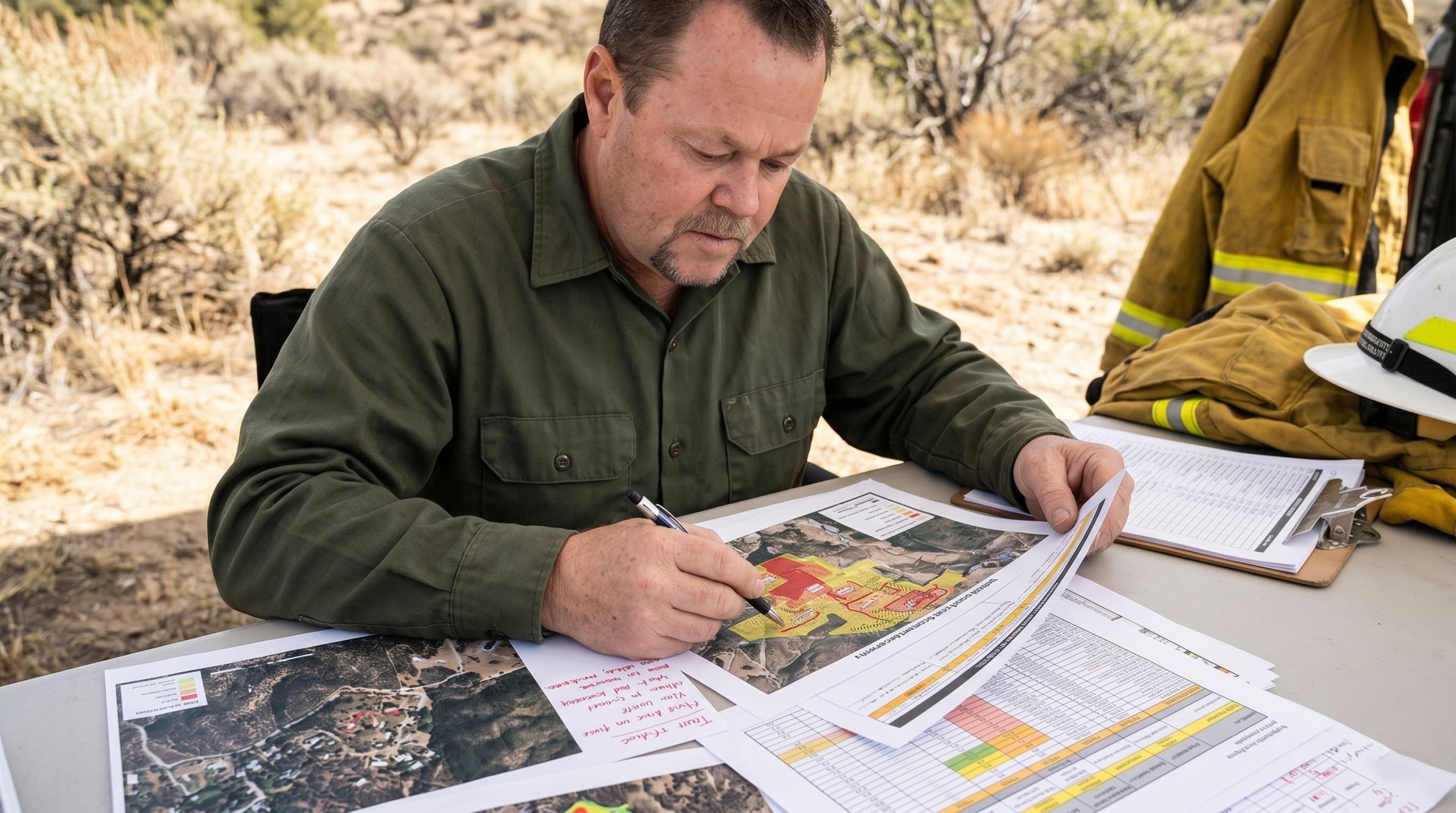
Robert’s value is that he doesn’t talk like a generalist. He started as a captive agent, expanded into wholesaling, and built London programs around high-risk residential placements. He works in the part of the market where standard policies stop fitting the risk.
When he explained how he built Wows, what came through was specialization.
“In the insurance world, it’s the same thing. Jack of all trades is probably not the right approach for the insurance world. We’re specializing in high value homes. We have programs from dollar zero all the way up to $50 million of total insurance, and we have specialty programs.”
I agree with him. Investors make the same mistake when they underwrite a complicated asset with a generic framework. Robert also sits on the FAIR Plan Clearinghouse committee, so his perspective comes from direct involvement, not outside commentary. It’s why I keep teaching the fundamentals-first approach I use with investors.
The Three Forces Actually Breaking the Western Insurance Market
Robert’s point was that the market isn’t breaking for one reason. Three forces are hitting at once: over-aggregation, rebuild cost inflation, and carrier flight. That combination is what owners feel when premiums jump or quotes disappear.
He started with over-aggregation:
“What’s killing the industry right now is really a couple of things. One is over-aggregation, meaning proximity of risks, grouping, heavily grouped policies. From an actuarial standpoint, that’s dangerous. You want to spread risk. We’ve been very big on spread of risk.”
If a carrier thinks too much exposure is stacked in one zone, price moves or capacity disappears. Rebuild costs then make old limits look silly. That’s why I pay attention to the way disciplined operators stress-test downside before they buy.
Fire Hardening, From Buzzword to Bottom-Line Advantage
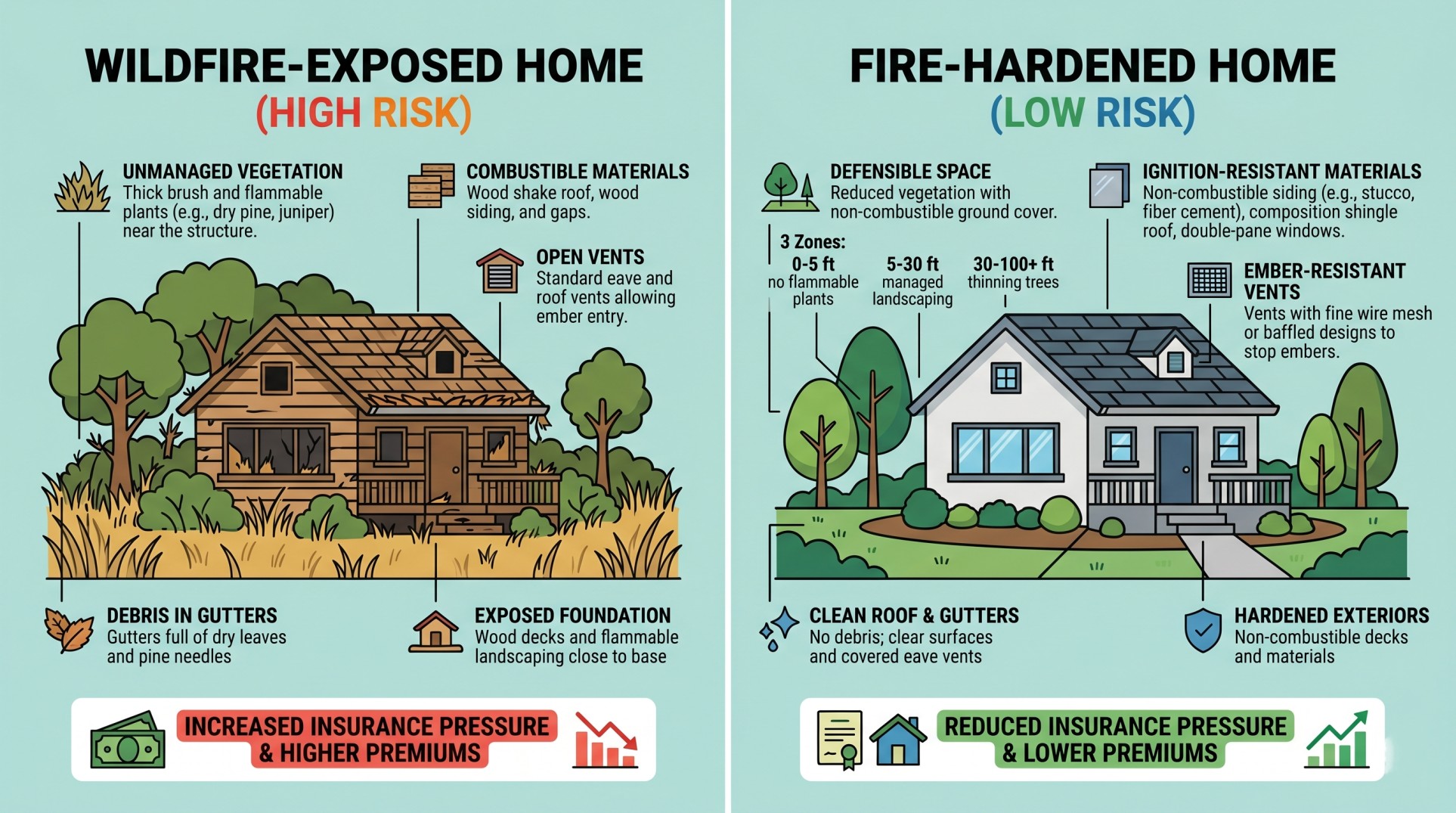
Fire hardening becomes real the moment you treat insurance like part of operations. Spend five minutes with a defensible-space checklist and you see the difference between theory and work: clearance, materials, ember exposure, and whether the property gives underwriters a reason to price the risk differently.
At bottom, this is an operations problem.
The number that stuck with me was his 4% loss ratio:
“We’re also very big on fire hardening. Fire hardening, for a lot of those out there, is a new term. Basically, it’s to make your house not burn, to take away vegetation, to do the things that are necessary to help a home survive in a catastrophe. During the Palisades fire, we had a 4% loss ratio based on fire hardening.”
The 4% loss ratio is what changes this from safety talk into investor math. Lower insurance cost feeds returns and exit value. That’s why I keep coming back to the same underwriting discipline in my own work.
The Umbrella Policy Mistake Most Landlords Make
Most landlords still think an umbrella liability policy is optional. Once you have tenants, you have claim exposure that can get expensive before fault is even clear.
He put it plainly:
“With rental properties, it’s really important to make sure you have your liability set properly. One of the mistakes I always flag to consumers: you really need to have what’s called an umbrella policy. An umbrella policy is excess liability that protects against, because in multiple states right now, you could have tenant issues regarding — God forbid — a fire or things of that nature that you can be liable for. It’s having the protection. An umbrella policy extends on top of policies and covers additional things a lot of times, such as wrongful evictions and all kinds of hosts of things that’ll help protect you.”
What changes when you take umbrella coverage seriously:
You’re insuring against the chance of a serious claim, not matching the policy to your net worth.
Higher limits give the carrier more room to defend you before the coverage is exhausted.
Saving a little on premium is not the same thing as managing cash flow well.
The part investors ignore is the defense side. Once a claim outruns the limit, a cheap policy stops feeling cheap. Insurance is the wrong line to trim.
LLCs, Umbrella Coverage, and the Get It in Writing Rule
I asked Robert about my own setup because this is where investors start making loose assumptions. A lot of people assume a personal umbrella follows a few single-member LLCs. Robert’s answer was cleaner than most internet advice. Once the property sits in the LLC, you’re usually in commercial exposure territory.
That part of the conversation also showed how many investors are guessing on entity coverage.
His answer was blunt:
“The problem is, the moment you have an LLC, you’re now in a commercial exposure. You have to look at a totally different — you’re doing excess liability from a commercial standpoint. A lot of times, investors have them in LLCs and from an insurance standpoint, it doesn’t make a lot of sense. If you’re going to have 20 properties, that makes complete and total sense. But if you have two or three properties, from a liability standpoint, you are much better to have it in your name, and you are much better to have an umbrella policy.”
That doesn’t make LLCs pointless. It makes the insurance tradeoff real. The tax and planning side still matter, and I’ve gone deeper on the long-term entity and planning side of real estate investing. Robert’s sharper point was procedural. If an agent says the umbrella covers the LLC, get it by email.
Three practical takeaways follow from that:
Ask the carrier plainly whether the umbrella follows the LLC-owned property.
Get the answer in writing, not over the phone.
Treat vague reassurance as a warning sign, not as proof.
Renter’s Insurance Actually Protects the Landlord More Than You Think
Landlords usually require renter’s insurance because it sounds responsible. Robert’s point was that renter’s insurance creates a layer of separation between the tenant’s liability and the landlord’s. The landlord is getting named either way, and the question is whether another policy steps in first.
He used a simple example:
“Well, first and foremost, as an investor you want to have a layer of separation. I use the skateboard situation: if you have a kid that leaves a skateboard out and someone slips on the skateboard, if they don’t have liability or don’t have a renter’s insurance policy, you’re going to be named either way as an investor. There’s really no way to defend yourself other than to use your insurance. If they have insurance and there’s a liability, generally the insurance companies will accept responsibility for it. It keeps you as an investor out of the way of it. Renter’s insurance policies are very nominal in cost and very important to have.”
The terminology fix matters here too. Landlords should be listed as an additional interested party, not as an additional insured. That designation keeps you informed about cancellations or policy changes without stretching the tenant’s policy into landlord coverage.
Lease language worth tightening:
Require active renter liability coverage before move-in.
Require proof at renewal, not just at lease signing.
Require the landlord to be listed as an additional interested party so cancellations and changes don’t stay invisible.
Fire Hardening as Acquisition Strategy: Finding Diamonds in the Rough
The most useful idea in this episode was the acquisition angle. Robert took rising insurance costs and turned them into acquisition logic. If a premium is high because the property is poorly hardened, the investor who can fix the risk may be buying against temporary fear.
He put it this way:
“There are some diamonds in the rough. The major difference — when you think about purchasing a property, there are really three parts of it, even as an investment. You have the debt service — that’s your mortgage, one part of the cost. You have the property tax — another cost. The last part, which people don’t talk about a lot of times, is the actual insurance cost. If you think about it, the higher the insurance costs go, it puts pressure to drive the cost of properties down.”
That’s where I think the real opportunity is. Distress doesn’t always show up as deferred maintenance. Sometimes it shows up as a premium nobody wants to carry. In some zones, the FAIR Plan becomes the backstop. If the real issue is fixable, the play can look a lot like a rehab.
Where the opportunity shows up:
The seller has a premium problem but no mitigation plan.
Buyers see the insurance cost and stop there.
A specialist can tell you which hardening moves underwriters will actually reward.
Where the Market Is Headed, and How Regional Catastrophes Spill Everywhere
Robert didn’t sound like someone expecting instant relief. He did sound like someone who thinks the market is closer to the bottom than to the start of the downturn.
His outlook was straightforward:
“I’m just thrilled to be a part of what’s going to fix it. We have the fix. It’s just now getting the information out and bringing more and more carriers to the table, including our own programs. We’re aggressively fixing it as we go. I do think we’re getting toward the tail or the bottom — the worst of it — while we fix things. I think we could be, within the next six months to a year, really turning the tides.”
The other piece investors miss is reinsurance. A fire year in California doesn’t stay in California, and a quiet year elsewhere can offset some of that pressure.
Robert’s short-term read:
The market looks closer to the bottom than the beginning of the slide.
New programs and depopulation efforts should help over the next six to twelve months.
Investors who wait for perfect headlines will probably miss the better buying window.
Key Takeaways
Robert’s framework forces the conversation back into investor math. Debt service and property tax both matter, but insurance belongs in the same tier of underwriting discipline.
The bigger opportunity is that insurance stress is starting to create price stress. If the problem can be fixed through mitigation and specialist advice, the investor who understands that has an edge. Robert explained both where the market is broken and where investors still have leverage.
Frequently Asked Questions
What is fire hardening and why does it matter for California property owners?
Fire hardening is the practical work of making a home less likely to ignite during a wildfire event. In Robert’s framing, that means reducing vegetation exposure, improving materials, and changing how the structure behaves under ember pressure. In high-risk zones, it becomes part of operating discipline.
How much umbrella insurance do I need as a real estate investor?
Robert’s baseline recommendation was $5 million to $10 million per occurrence for investors with rental exposure. His reasoning was that umbrella coverage should be sized around the probability of a serious liability event, not around ego or asset value. A $1 million limit can disappear faster than many landlords assume.
Does my umbrella policy cover properties I hold in an LLC?
As a general rule, Robert said no. Once the property sits inside an LLC, the exposure becomes commercial, and a personal umbrella policy typically does not follow it. If your carrier says otherwise, Robert’s advice was to get the answer in writing and make them own the statement.
What is the FAIR Plan and who qualifies for it?
The California FAIR Plan is the market of last resort for property owners who cannot secure standard coverage through the admitted market. Robert described it as the fallback that can keep smaller homes insured when normal carriers won’t write the risk. It is a backstop, but it still has to be paired with realistic coverage expectations and mitigation work.
Apply to Be a Guest on the Cash Flow Authority Podcast
This episode worked because Robert tied a volatile insurance story back to real investor decisions. He tied wildfire pressure, umbrella liability, LLC exposure, and renter separation back to how a property actually performs.
If you work in the parts of real estate where bad assumptions cost real money, I want to hear from you. Wildfire insurance in California is no longer a side topic for investors; it’s part of the deal math.