


Susan Jones of Sorelle Wealth Partners on Real Estate Wealth

Most investors I coach pour their energy into analyzing deals and almost none into what happens after they close. Susan Jones, an attorney, CFP, and managing partner of Sorelle Wealth Partners, has spent 25 years watching that pattern play out.
When she sat down with me on the Cash Flow Authority Podcast, she immediately said that you can’t depreciate land, and most investors who think they can write off 100% of a property purchase are working from a misunderstanding of how depreciation works. That opened up a conversation covering cost segregation strategies in real estate, 1031 exchanges, LLC structuring, and succession planning.
Susan’s background in international law, national accounting, and leadership at a top-100 registered investment advisory firm meant she had zero incentive to sugarcoat anything. Here’s what I took away from the conversation.
A few moments from this conversation cut straight to the point. Watch the highlights below before you read on.
If you want the full conversation on cost segregation, 1031 exchange pitfalls, and LLC mistakes most investors don’t catch, the whole episode is right here.
Susan Jones of Sorelle Wealth Partners is exactly the kind of expert we build episodes around at The Flow Authority.
Stay plugged into conversations like this one on LinkedIn, Instagram, Facebook, YouTube, and X.
You can also connect with Susan directly on LinkedIn or through Sorelle Wealth Partners on LinkedIn.
Why Real Estate Investors Should Think Beyond Cash Flow

Susan works with investors who focus almost entirely on income and barely glance at their balance sheet. Liquidity, debt-to-value ratios, and diversification matter just as much once you start scaling. I’ve watched investors go all in with maximum leverage, only to have a roof fail or a tenant file for bankruptcy with nothing left to cover the gap.
“The roof example is what I always say, what are you going to do when that roof goes? Real estate investors in particular are a very optimistic group, which is great. But I’m a big believer in planning for the worst and hoping for the best. That’s really true when you’re planning for real estate as well.”
That optimism makes investors great at finding deals, but it creates blind spots when things turn. A strong balance sheet buys you time and options when something breaks.
The Most Overlooked Tax Tool in Real Estate: Depreciation
Depreciation is the most powerful and most misunderstood tax benefit available to real estate investors. The internet has made this worse, not better. I had a friend who Googled cost segregation and walked away thinking he could write off an entire property purchase in year one. Even the AI-generated result confirmed it. That’s not how it works.
Susan told me she gets a version of this conversation all the time.
“I’ll have clients come to me and say, ‘I’m going to buy this property and depreciate 100% of it the first year.’ But part of the purchase price is going to have to be allocated to land, and you can’t depreciate land. And even what qualifies for bonus depreciation likely isn’t going to be the building and structure, it’s going to be those internal components. So really understanding what that benefit is.”
Record-keeping is the piece nobody talks about. You can have access to every tax strategy available, but if your books aren’t clean at tax time, you’ll miss deductions sitting right in front of you.
Cost Segregation Studies: What They Are and When They’re Worth It
A cost segregation study breaks a property into individual components so that qualifying parts can be depreciated on an accelerated schedule rather than over the standard 27.5 or 39 years. It doesn’t make financial sense for every property type, though.
I looked into cost segregation for my smaller properties, and my CPA told me it wasn’t worth it. Every apartment investor I know uses it, and Susan’s experience lines up. Her commercial and apartment clients run cost segregation almost universally, while most residential clients can’t justify the cost.
When to Skip Bonus Depreciation (Yes, Really)
The bonus depreciation that real estate investors hear about constantly gets treated like a guaranteed win. Susan challenged that assumption directly.
“While accelerated depreciation and getting that cash back is often the best thing to do, there are situations, especially when you’re starting out in real estate without a lot of ordinary income, where it can actually be better to forego the bonus depreciation. You’ll get the benefit of that depreciation in a later year when you’re in a higher tax bracket. Depreciation, like any deduction, is worth more in a year that you’re in a higher tax bracket.”
A deduction saves you more when you’re in a higher bracket. Taking bonus depreciation in a low-income year burns a benefit worth significantly more later.
1031 Exchanges: The Rule That Has No Rewind Button
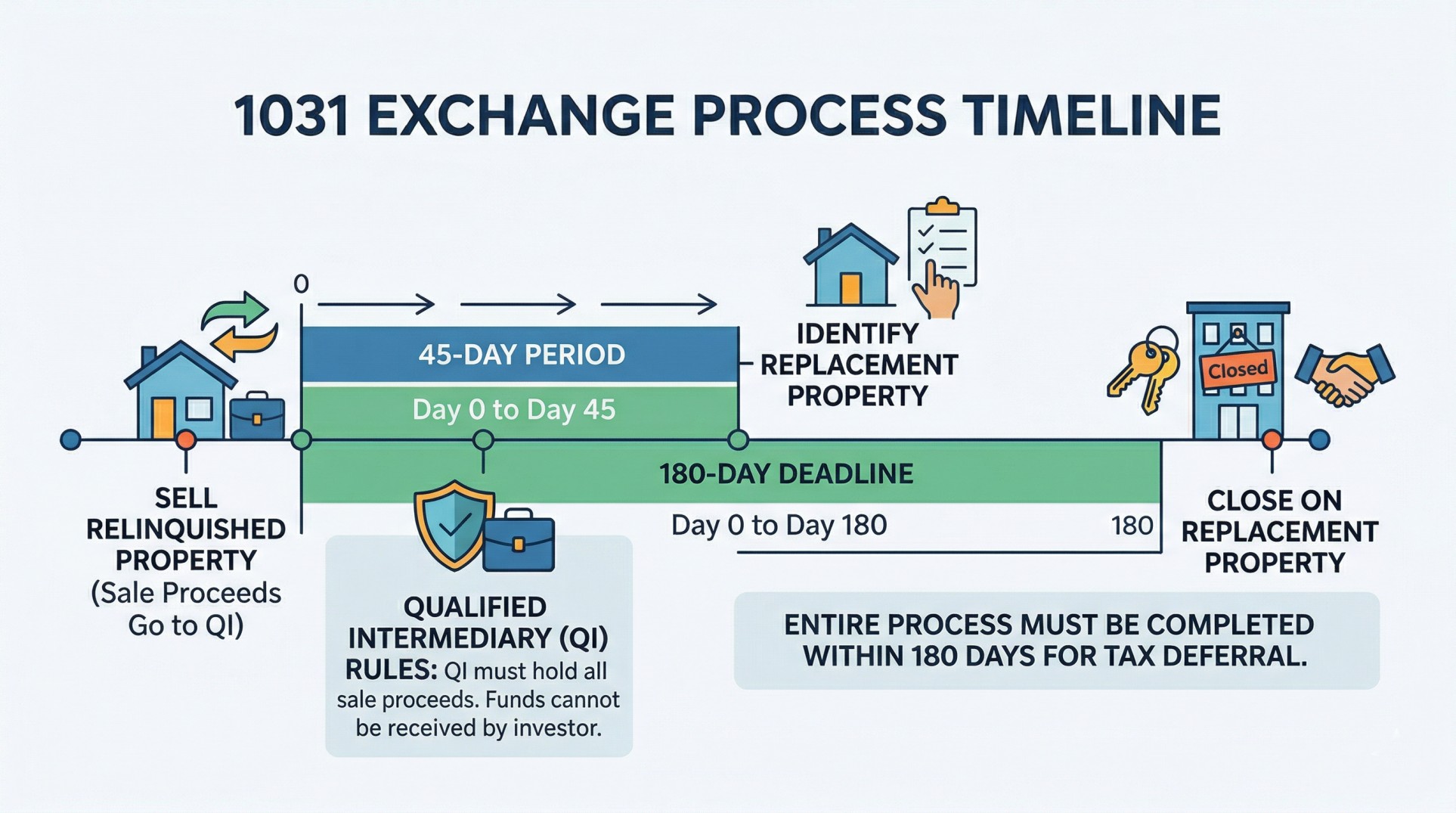
For investors considering selling and reinvesting, a 1031 exchange remains one of the most effective tools in real estate investing for deferring capital gains. The timeline requirements are strict: 45 days to identify a replacement property, 180 days to close, and the proceeds must be held by a qualified intermediary throughout.
Susan has watched investors blow the entire deferral over one procedural mistake:
“It’s very rule-specific and you really can’t go back. You have to very strictly comply with the time limits and rules around using an escrow agent or third-party intermediary. I’ve seen people get into trouble thinking they can just have the money sent to them, and all of a sudden it blows up what could have been a beneficial 1031 exchange opportunity.”
This isn’t a strategy you learn from a blog post. If you’re doing a 1031 exchange, hire an attorney who specializes in them, and start planning months before the sale closes.
Your LLC Isn’t Protecting You If You’re Doing This
Susan runs into the same pattern over and over. Investors set up an LLC for liability protection and then never actually operate through it. Rent checks go into personal accounts, insurance stays in an individual’s name, and the books are never separated. At that point, the LLC provides zero protection and can create liability if coverage doesn’t match titling.
The specific behaviors that void the asset protection your real estate LLC provides:
Depositing rent into a personal bank account instead of the LLC account
Keeping insurance policies in your personal name rather than the LLC
Failing to maintain separate financial records and books
Commingling funds between personal and business accounts
I use a holding company structure for this reason. Each property LLC pushes extra cash up to the holding company, which distributes back down as needed. Susan confirmed this is one of the more effective ways to manage multiple entities without the chaos of shuffling funds between a dozen accounts.
The Advisory Team That Pays for Itself
Susan was direct about what a serious real estate investor’s team should look like:
“I’m a big believer in having an accountant who deals with real estate regularly, an attorney who deals with real estate, and a financial advisor who deals with real estate. And especially not just having that team in place, but a team that is willing and able to work collaboratively, because that’s going to pay for itself in a lot of cases.”
“Even for professionals like myself, CPAs, and attorneys who work with real estate investors, we’re not in real estate ourselves. So it’s really important to have a mentor or someone who can show you the ropes, tell you what is a good deal and what’s not, and help you run through some of that.”
The key word is “collaboratively.” Advisors who never talk to each other miss the problems that sit between disciplines. I’ve been the investor who skipped the team and tried solo, and it cost me. If you’re new, you also need a coach who’s actively doing deals and teaching the process, not just advising from the sidelines. I break down my approach to coaching new investors in more detail on the blog.
How to 1031 Into a Passive Life: Farmland, DSTs, and Triple-Net Leases
You can’t 1031 directly into an LP position in a partnership, because the IRS doesn’t treat that as a qualifying real estate interest. But you can 1031 into a Delaware Statutory Trust (DST), which holds real estate and qualifies for like-kind exchange treatment.
One of Susan’s clients did exactly that. He sold commercial office buildings and 1031-exchanged into farmland on triple-net leases. One move turned a hands-on operation into something completely passive. Someone else manages the land, you collect the lease income, and you’ve deferred the capital gains.
Susan recommends keeping a ranked list of your properties so you know which ones to sell first. The assets generating the most headaches go at the top.
Succession Planning: The Wealth Gap Nobody Wants to Talk About
Susan told me about a client whose parents had built a substantial real estate portfolio with no succession plan. When both parents passed close together, the family inherited deferred maintenance issues, mislabeled assets, and entities that required complex legal unwinds to sort out.
Deferred maintenance and succession planning are the same problem. If you’re not setting aside reserves for capital expenditures today, you’re compounding the problem for whoever inherits your portfolio tomorrow.
I see this with my own clients all the time. Investors plan to replace the roof in five years and never set the money aside. Tax depreciation is real, but so is the physical kind. Skip the reinvestment, and whoever inherits the portfolio gets a liability instead of an asset. It’s one of the reasons I got into real estate coaching in the first place.
The Intentional Investor: Building a Strategy Before Buying a Deal
Susan saved her sharpest point for last:
“What I see sometimes is that it’s all about the deal, is it a good deal, and people forget to ask whether it aligns with what they want their portfolio to look like. From day one, have an idea of what kinds of properties you’re interested in, what that’s going to look like, who you need to learn from, who to hire. Come up with a strategy for ramping up, and then if there comes a time you want to ramp down or pivot, have a strategy for that too.”
In my real estate investing program, I call this “Investor Identity.” Define your property types, target neighborhoods, and management style upfront. Investors who skip that step chase every shiny object on their feed and end up paralyzed, stuck with too many strategies and no depth in any of them. Susan Jones of Sorelle Wealth Partners reinforced what I’ve seen repeatedly. The investors who build wealth plan before they buy.
Key Takeaways
Focus on your balance sheet, not just your cash flow. Debt-to-value ratios, liquidity, and diversification all matter as your portfolio grows.
Cost segregation can accelerate depreciation, but it only makes sense for the right property types. Most older single-family homes won’t pencil out.
Bonus depreciation is not always the right move. If you’re in a lower tax bracket, it may be worth deferring the deduction to a higher-income year.
1031 exchanges are powerful but unforgiving. One procedural mistake can cost you the entire tax deferral, so always use a qualified intermediary.
Your LLC only protects you if you honor it. Separate bank accounts, correct insurance titling, and clean books are non-negotiable.
Succession planning is not optional. Without one, even a strong real estate portfolio can become a burden for the people you leave it to.
Frequently Asked Questions
What is a cost segregation study?
A cost segregation study is an engineering analysis that separates a property into its individual components, allowing qualifying parts to be depreciated on an accelerated timeline rather than the standard 27.5- or 39-year schedule. This can significantly boost depreciation deductions in the early years of ownership. The study makes the most sense for commercial properties and apartment buildings where internal components represent a large share of total value. Older single-family homes rarely provide enough upside to justify the cost.
Can you write off 100% of a real estate purchase with bonus depreciation?
No. Land is never depreciable. Even building and structural improvements don’t fully qualify; bonus depreciation applies to shorter-lived personal property components. The percentage that qualifies varies by property type and age. Work with a real estate CPA rather than relying on internet articles or AI tools for tax guidance.
What are the rules for a 1031 exchange?
A 1031 exchange defers capital gains taxes when you sell an investment property and reinvest proceeds into a like-kind property. You must identify the replacement within 45 days and close within 180. The proceeds must be held by a qualified intermediary; receiving them directly disqualifies the exchange and triggers full tax liability.
How do I make sure my LLC is actually protecting me?
Setting up the LLC is only the first step; you must operate through it. Deposit rent into the LLC’s bank account, hold insurance in the LLC’s name, keep separate records, and file annual state filings. Commingling funds can allow a court to pierce the veil and hold you personally liable. Review your entity setup with a real estate attorney annually.
What does Sorelle Wealth Partners do and who is it for?
Sorelle Wealth Partners is a fiduciary, fee-only wealth management firm led by Susan Wofford Jones, J.D., CFP, CDFA. The firm focuses on financial planning for women in major life transitions: divorce, inheritance, career changes, and retirement. Susan’s combined legal and financial planning background gives the firm a rare ability to integrate both disciplines.
Apply to Be a Guest on the Cash Flow Authority Podcast
Conversations like the one with Susan Jones of Sorelle Wealth Partners are what this show is built on. Before anyone sits down on this show, I need to know they’ve done the work and can help someone else avoid the mistakes they’ve seen. Susan brought 25 years of watching investors make the same planning errors, and that kind of specificity is what makes an episode worth listening to.
If you’re working in real estate and solving problems most investors don’t see coming, whether in tax strategy, legal structuring, asset management, or coaching, we want to hear from you.
Disclaimer: The Flow Authority makes no promise or guarantee of any results, money, success, or lifestyle from learning real estate investing strategies. The information provided in this blog is for educational and informational purposes only and should not be considered financial, legal, or professional advice. The views expressed in this blog are those of the author and do not necessarily reflect the official policies or positions of any organization, government agency, or financial institution. Any personal experiences shared are for illustrative purposes only and may not apply to every person's situation. This information is general, not personal. Seek specific advice from a licensed professional for legal, financial, and business decisions. There are no typical results in real estate investing; every person, property, and transaction is unique. The information shared in this blog is believed to be truthful, accurate, legal, moral, and ethical, and is subject to change.